
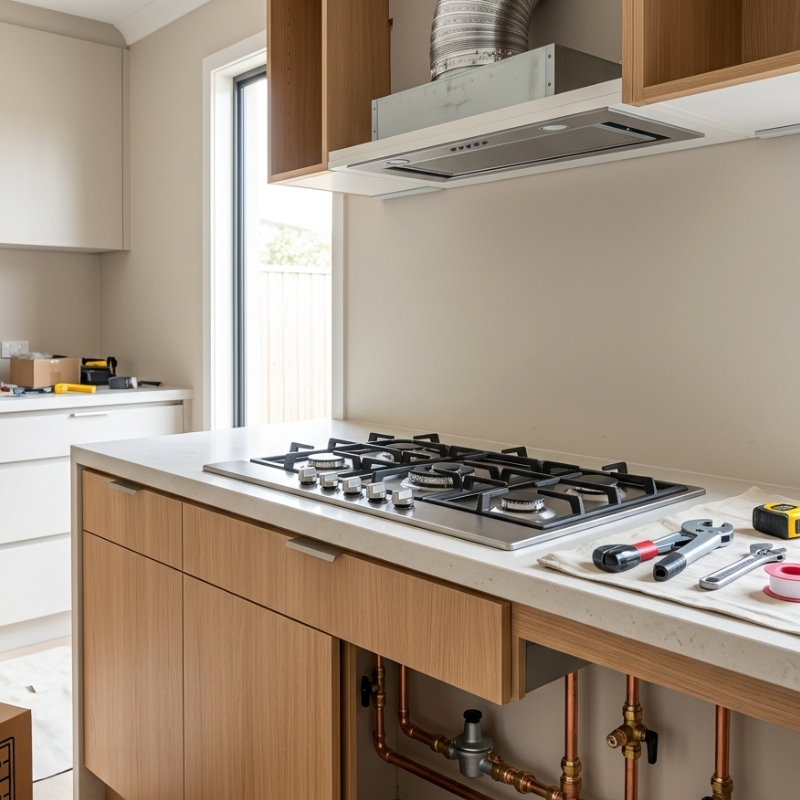
A new splashback and sleek cupboards are only half the story when a Sydney kitchen is getting a facelift. The moment you introduce gas—whether that is relocating a bayonet, switching from electric to gas cooking, or upgrading ventilation—extra rules come into play. Sorting those requirements early will protect both your budget and your timeline. Engaging an experienced gas fitting team during concept design, rather than once demolition starts, stops small layout tweaks from snowballing into costly compliance headaches.
What Drives the Price Tag
Every home hides its own twists behind plasterboard or double-brick, so prices swing widely. Still, a few factors crop up in almost every quote.
- Pipe length and route
Longer runs eat materials and labour. Copper remains the most common choice because it handles Sydney’s coastal conditions, though flexible stainless corrugated tube is gaining ground for tight cabinetry corners. The latter costs more per metre but can shave an hour or two off labour. - Access conditions
Timber-floored Federation cottages give fitters space to crawl under joists, whereas apartments often need core-drilling through concrete. Expect higher labour allowances wherever jackhammers or ceiling access panels become necessary. - Appliance capacity
Commercial-style hobs draw more megajoules per hour than a standard four-burner cooktop. Larger lines or upgraded metres can be required, pushing costs upward. - Ventilation upgrades
Australian Standard AS/NZS 5601.1 insists on specific air-exchange levels around gas appliances. If your existing rangehood falls short, a bigger duct or make-up air vent has to be added before the compliance plate is issued.
Most suburban kitchens land somewhere between $1,000 and $3,000 for straight-swap installations. Projects involving metre relocations or multiple new appliances easily double that figure. Always request a line-item quote so you can see exactly where allowances sit.
Council, Strata and Legal Green Lights
Gas work falls under its own legal umbrella regardless of whether the wider renovation is exempt or complying development. In NSW, the Gas and Electricity (Consumer Safety) Act requires that anyone altering pipework hold a current Certificate of Competency or Qualified Supervisor Certificate. Checking a licence online is quick and free, yet owners still skip this step and regret it later when insurers ask for paperwork.
- Heritage zones
If your home sits inside a conservation precinct, the council may ask for heritage impact notes even when walls remain intact. Kitchens in Victorian terraces or Federation semis often fall into this bracket. - Strata schemes
Apartment owners need written approval because gas lines typically pass through common property. Allow a fortnight for the committee to circulate documentation. Building managers also want proof of public liability insurance before trades can book the loading bay. - Ventilation sign-off
Cabinetmakers sometimes squeeze a deep cupboard over a powerful wok burner, wiping out the minimum clearance. Plan the rangehood size and duct path with the gas fitter before cabinets are ordered.
The state updates regulations periodically. Hydrogen readiness is the emerging theme, yet current codes remain focused on natural gas pressures. Keep an ear out for announcements, but design to the standard published today until NSW Fair Trading releases fresh guidance.
Booking and Sequencing Trades
Setting the right order prevents stalled work and call-back costs.
- Concept meeting
Once appliance models are chosen, invite the gas fitter to mark pipe routes and penetration points. A 45-minute walk-through at this stage can save an entire day later. - Rough-in
Gas pipes go in after demolition but before new plasterboard. If walls are double-brick, factor in extra time for chasing and patching masonry. Trades often overlap here; make sure the plasterer knows not to close a wall until pressure testing is complete. - Cabinet installation
Fitters return after benchtops and rangehoods are in place. Leaving removable back panels inside cupboards keeps access simple. Avoid fully gluing kicks until the compliance certificate lands. - Commissioning
A qualified supervisor must witness pressure testing and appliance ignition. Coordinating that visit can be the only scheduling bottleneck, especially during Sydney’s spring building rush. Book tentative dates six weeks out and lock them in once benchtop lead times firm up. - Weather delays
Most interior pipework is weatherproof, but metre moves and external trenches pause during heavy rain because wet soil collapses. If the metre sits on the far side of the yard, pad the schedule with a contingency week.
Paperwork That Actually Matters
Once the burners fire blue and steady, two documents close out the project:
- Certificate of Compliance
Proves the installation meets AS/NZS 5601.1. Store a digital copy; agents increasingly ask for it when listing a property. - Notice of Work
Filed online with NSW Fair Trading. You will receive a reference number rather than a paper form. Keep that email with your house records.
If you want a deeper dive into why these forms protect homeowners, our detailed gas compliance guide explains common buyer-and-seller disputes that arise when certificates go missing.
Always match the licence number on the paperwork to the NSW Fair Trading licence checker before releasing final payment. Errors are rare but easier to fix while the tradesperson is still on site.
Getting From Demo Day to Pancake Day
Kitchens leave little margin for relocation once stone benchtops land, so finalise gas routes long before the splashback is tiled. Budget realistically for hidden quirks, confirm approvals early, and slot your fitter into the build calendar as soon as appliance choices are locked down. That approach keeps budgets in line and timelines steady, letting you enjoy the first Sunday breakfast on a real flame rather than juggling a portable electric hotplate.