
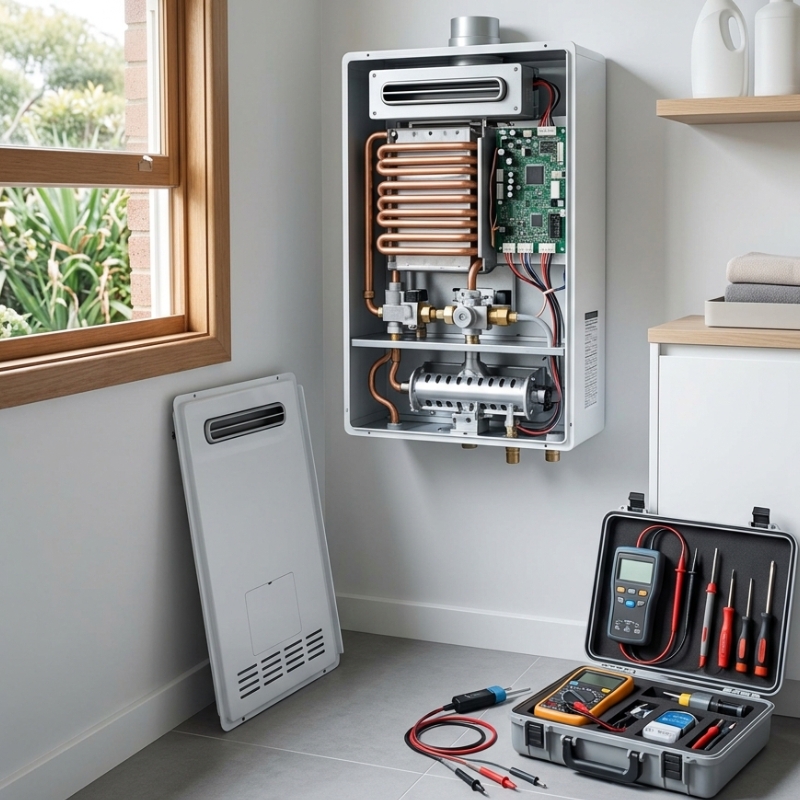
Gas Heater Service vs DIY Tune-Up
Weekend handyperson videos make a gas heater tune-up look harmless. The reality is far more involved: flue pressures, combustion checks and legal compliance sit behind every panel. The choice between loosening a few screws yourself or booking a professional gas heater service shapes safety, running costs and appliance life across many winters.
Hidden Technicalities
Modern heaters blend precision gas flow with electronics. Even a ten-year-old wall furnace can contain a microprocessor, stepper-motor valve and flame-sensing circuitry. A DIY clean might remove surface dust, yet it never touches those subsystems.
Carbon monoxide (CO) testing illustrates the gap. SafeWork NSW considers anything above roughly nine parts per million over eight hours unacceptable. Verifying that level demands a calibrated electrochemical analyser—an instrument licensed technicians must bench-test yearly. Online detectors sold for household use often drift out of range within months, giving a false sense of security.
Ventilation adds another layer. In apartments, shared flues interact unpredictably when neighbours light their heaters. Identifying negative pressure zones sometimes calls for a smoke pen and manometer. Homeowners rarely own that gear, so downdrafts and back-spillage risks stay invisible until the first dizzy spell.
The technical web also includes thermostat calibration, gas pressure adjustment, heat-exchanger inspection and flue draft measurement. Each task has a manufacturer specification and usually a torque or micrometre tolerance. Tweaking a single screw without the right data can offset the entire combustion mix.
Safety And Legal Red Flags
Fire & Rescue NSW records dozens of heater-related incidents every winter. The common thread is incomplete combustion that pumps odourless CO into bedrooms. Early symptoms—headache, nausea, fatigue—mirror the flu, so families often push through the discomfort while the concentration builds.
The NSW Gas and Electricity (Consumer Safety) Regulation 2018 forbids unlicensed gasfitting. Turning a gas valve, reseating a pilot assembly or resealing a flue joint all count as gasfitting work. If a fault later causes property damage, insurers can deny claims on the basis of unauthorised alteration. Landlords face another layer of exposure: the Residential Tenancies Act requires that gas appliances be safe and functional. A DIY service may leave them in breach of those obligations.
Electrical isolation is frequently overlooked. Most heaters house 240-volt fans and control boards. Removing the front cover without locking out the power supply exposes the operator to shock or arc flash risks. Licensed technicians carry voltage testers and lock-tag kits rated for domestic circuits.
For readers chasing a deeper technical breakdown of frequent heater malfunctions, the internal guide on eight common gas furnace problems explains how small faults can snowball into major failures.
Efficiency And Warranty Hits
A burner clogged with lint might still ignite, yet it rarely burns cleanly. Incomplete combustion wastes fuel and forces the heater to run longer for the same warmth. Over a Sydney winter, that inefficiency can erode the savings a homeowner hoped to bank by skipping a professional visit.
Manufacturer warranties tighten the screws further. Brands such as Rinnai and Braemar specify logged services by a licensed gasfitter every one or two years. Missing those stamps voids coverage on parts like heat exchangers and ignition modules. Replacing either can cost several hundred dollars, wiping out years of imagined DIY economy.
Dirty fans raise noise levels, while neglected thermocouples can cause sudden shutdowns. Each symptom might be tolerable on its own, yet they combine to shorten appliance life. A full wall-furnace replacement regularly runs into the thousands, compared with the moderate fee for an annual service.
When Pros Pay Off
Licensed technicians approach a heater as part of a broader house system. They measure gas pressure against manufacturer data, adjust air–fuel ratios and lubricate bearings. Recovered efficiency typically lands somewhere between five and ten per cent, a figure that shows up on the energy bill before July’s cold snap ends.
The intangible value is peace of mind. A signed CO clearance and flue integrity report reduce stress, particularly in households with children or elderly relatives who might miss early poisoning signs. For landlords, the paperwork creates a compliance trail that shields against liability claims.
A professional tune-up also uncovers minor wear before it turns serious. Replacing worn ignition leads or fan belts during a scheduled call costs far less than an emergency breakdown on a Sunday evening.
Small Jobs Homeowners Can Safely Handle
A service call does not banish every task to the trades. Occupants can:
- Vacuum lint around return-air grilles.
- Keep the outdoor flue terminal clear of leaves and cobwebs.
- Replace batteries in wireless thermostats each spring.
Monitoring the heater’s daily behaviour—yellow flames, lingering odours, rapid cycling—provides the technician with useful clues on arrival, shortening diagnostic time and, occasionally, reducing labour costs.
For official safety checklists and seasonal advice, the NSW gas heater safety guidance offers up-to-date recommendations endorsed by state regulators.
Households that recognise these boundaries between light maintenance and licensed gas work stay warm without gambling on hidden dangers or regulatory surprises.