
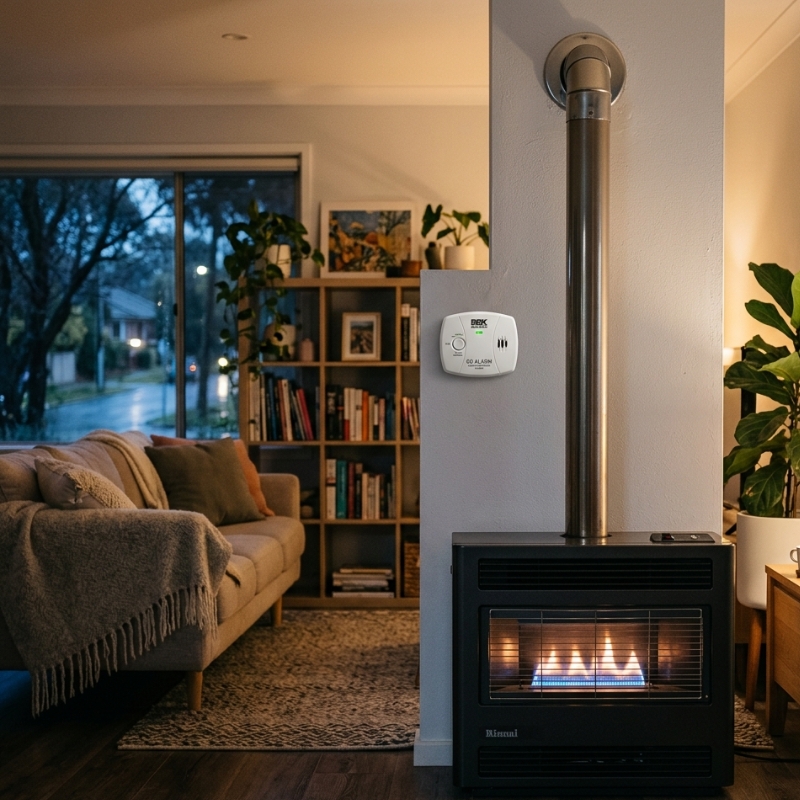
Keeping warm should never come at the cost of your family’s safety. When a gas heater is running efficiently, it produces only carbon dioxide and water vapour. If something is wrong, it can release carbon monoxide (CO) – a colourless, odourless gas that makes hundreds of Australians sick every winter. This guide explains how CO leaks start, the signs to watch for, where to place alarms and the habits that reduce risk. Along the way, we’ll show why simple habits such as regular professional gas heater servicing matter just as much as buying the right detector.
Why Carbon Monoxide Forms in Faulty Gas Heaters
Carbon monoxide forms when a fuel-burning appliance doesn’t get enough oxygen for complete combustion. A few common causes include:
• Blocked flues or vents restricting airflow
• Cracked or rusted heat exchangers, letting exhaust gases mix with indoor air
• Damaged burner assemblies producing a yellow, sooty flame instead of a crisp blue one
• Incorrect gas pressure or poor maintenance leading to incomplete burn
In many Sydney homes built before mandatory ventilation requirements, a portable or flued heater might operate in a tight room with closed windows. Add a lack of servicing and the risk increases. Understanding these causes is the first defence against a silent leak.
Recognising Early Signs of a Possible CO Problem
Because you can’t see or smell carbon monoxide, detection relies on indirect clues. Some come from the appliance, others from how people feel. The table below compares common indicators, what they may suggest and the safest next step.
| Situation | What It May Mean | Suggested Action |
| Pilot light frequently blows out | Incomplete combustion or ventilation issue | Turn the heater off and arrange an inspection |
| Yellow or flickering burner flame | Poor air mix, producing excess CO | Stop using the unit until checked |
| Sooty stains around the heater or flue | Exhaust gases spilling into the room | Ventilate area, switch off heater, book a technician |
| Household members feel dizzy, nauseous or get headaches only when heater is on | Possible early CO exposure | Move to fresh air, see a doctor, have heater tested |
| Condensation on cold surfaces more than usual | High water vapour from poor combustion | Improve ventilation and have appliance serviced |
These signs do not confirm a leak on their own, but they should never be ignored.
NSW Rules and Recommendations for Safe Heater Use
Under NSW regulations, landlords must provide and maintain gas appliances in a safe condition. Homeowners also have a duty of care to occupants. The state’s consumer regulator, NSW Fair Trading advice, recommends:
• Having all fixed and portable gas heaters serviced at least every two years, or annually if the manufacturer suggests
• Ensuring rooms with open-flued heaters have adequate ventilation
• Installing certified carbon monoxide alarms near sleeping areas and living zones
While alarms are not yet compulsory in NSW, many local councils encourage them, especially in homes with elderly residents or small children.
Choosing and Positioning a Carbon Monoxide Alarm
All alarms sold in Australia must meet AS 3786 or an equivalent international standard. Beyond that, features vary. Use the quick comparison below to pick one suited to your household.
| Alarm Type | Power Source | Useful Features | Ideal Placement |
| Battery-powered standalone | Replaceable or sealed 10-year lithium | Test button, low-battery chirp, digital ppm display | Wall or shelf 1–3 m from heater, 1.5 m above floor |
| Hard-wired with battery back-up | Mains power | Interconnects with smoke alarms, remote hush | Ceiling outside bedrooms, hallway junctions |
| Smart Wi-Fi alarm | Battery or hard-wired | App alerts, data logs, push notifications | Same as above, plus near phone-charging areas |
Important placement tips:
- Avoid installing directly beside kitchens or bathrooms where steam may trigger false alarms.
- Do not conceal alarms behind curtains or furniture.
- Test monthly and note expiry dates; most sensors last seven to ten years.
Ventilation Habits That Reduce CO Risk in Winter
Sydney’s crisp July nights tempt us to seal every window, but a small amount of airflow helps appliances burn cleanly. Try these low-effort habits:
• Crack open a high window on the opposite side of the room from the heater.
• Keep internal doors ajar so fresh air circulates.
• Use a rangehood or extraction fan if the heater is in an open-plan kitchen-living area.
• Don’t dry clothes directly in front of a gas space heater – it blocks heat and ventilation.
The Role of Regular Servicing: What a Licensed Gas Fitter Checks
A proper service is more than a quick dust-off. Expect the technician to:
- Inspect burner flames for shape and colour.
- Test for CO emissions with calibrated equipment.
- Clean burners, injectors and filters.
- Check flue integrity and clear any nests or debris.
- Confirm gas pressure, thermostat accuracy and safety shut-off response.
- Provide a written report with any repair recommendations.
Annual servicing is sensible for high-use heaters, especially in families with young children, pets or allergy sufferers. Skipping it can void warranties or insurance claims after an incident.
DIY Checks vs Professional Help: Where to Draw the Line
Some owners feel confident vacuuming dust from a heater grille, but other tasks require qualifications. The table below clarifies which actions are homeowner-friendly and which should be left to a licensed gas fitter.
| Task | Safe for Homeowner? | Reason |
| Wipe external surfaces and vacuum intake grilles | Yes | No internal components disturbed |
| Replace batteries in CO alarm | Yes | No gas components involved |
| Adjust gas pressure or burner settings | No | Incorrect settings can increase CO production |
| Disassemble heater panels to clean inside | No | Risk of damaging seals or wiring |
| Install or modify flue pipes | No | Flue integrity is critical for exhaust removal |
If unsure, err on the side of caution and book a professional.
Other Warning Signs That Warrant Immediate Attention
Odours, even if not from CO itself, often point to combustion issues. For a deeper dive into musty, chemical or burning smells, see our guide on what different gas heater smells mean. Acting early can prevent minor performance glitches from becoming serious safety hazards.
Frequently Asked Questions
- Can newer, energy-efficient gas heaters still produce carbon monoxide?
Yes. High efficiency does not guarantee complete combustion if the appliance is damaged, poorly installed or starved of oxygen. Annual servicing and proper ventilation remain essential. - Where should I place a carbon monoxide alarm in a two-storey Sydney terrace?
Install at least one alarm on each level. Position one near bedroom doors upstairs and another in the living area with the heater. Avoid ceilings above 3 m high or spaces with constant drafts. - Are plug-in CO detectors reliable during power outages?
Most plug-in units sold in Australia include a battery backup. If yours doesn’t, choose a model with that feature or add a separate battery unit. - What symptoms suggest I should see a doctor after potential CO exposure?
Persistent headache, dizziness, flu-like nausea, confusion or shortness of breath warrant medical assessment, especially if they ease outdoors. - Does home insurance cover damage from a carbon monoxide incident?
Policies vary. Insurers often ask for evidence of regular appliance maintenance. Keep service receipts and follow manufacturer guidelines to support any future claim.
Key Takeaways
Carbon monoxide leaks are rare when heaters are installed correctly, ventilated and maintained. Simple habits – opening a window a crack, testing alarms monthly and scheduling routine servicing – stack the odds in your favour. If any warning sign crops up, switching the appliance off and seeking professional advice is the fastest route back to a warm, safe home.
Staying on top of these steps means you can enjoy cosy winter evenings without second-guessing every breath.