
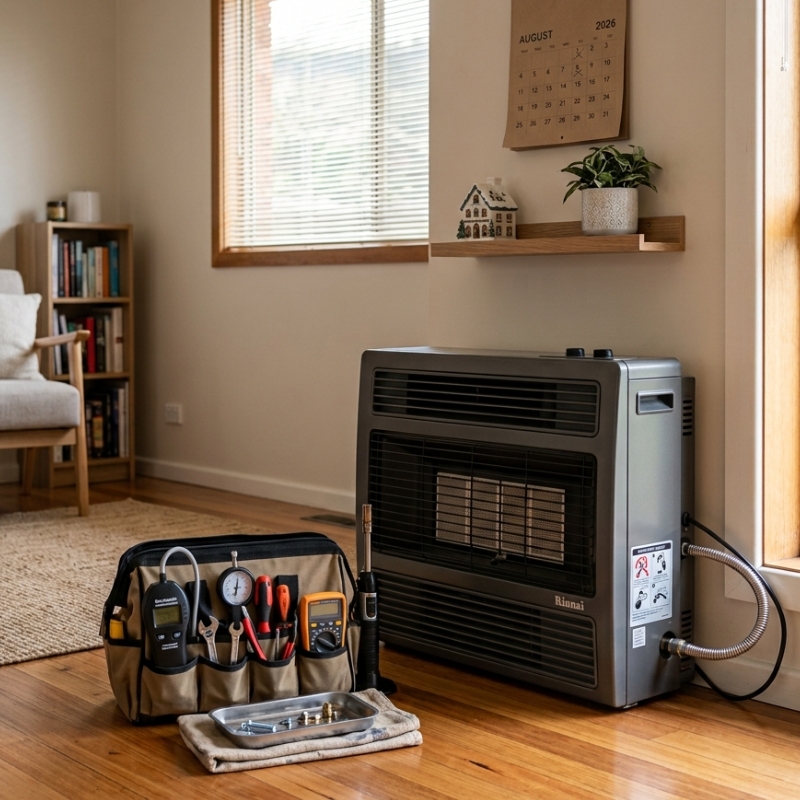
Why timing matters more than you think
Sydney winters may be short compared with Melbourne or Canberra, yet the city’s damp evenings and coastal winds push gas heaters hard from May through August. Dust, pet hair and salt air collect inside every grille and burner. Left untouched, the mix reduces efficiency and can let carbon monoxide seep indoors. Booking a professional gas heater service each year keeps running costs down and, more importantly, safeguards everyone in the house.
The once-a-year rule of thumb – and when to break it
Most manufacturers, insurers and NSW rental regulations land on an annual service cycle. One year is long enough for combustion components to drift out of spec but short enough to catch minor wear before it turns into a ruptured heat exchanger.
That said, the blanket “every 12 months” advice doesn’t suit every home. Consider shortening the interval if:
- The heater runs more than four hours a day for most of winter.
- You have toddlers, elderly parents or anyone with respiratory issues living under the roof.
- Renovations have filled the house with plaster dust.
- You own a balanced-flue unit and recently installed double glazing, which can alter ventilation.
Each scenario pushes contaminants into the system or places vulnerable people at higher risk. A biennial check isn’t enough in those conditions.
Seasonal sweet spots for Sydney households
Late March or early April is the ideal booking window. Technicians still have capacity before the winter rush, and you avoid the June price surge that hits when every second household realises the pilot light won’t stay on. If you miss the shoulder period, early September is the next best option. The heater will have just clocked its heaviest workload, so any worn seals or loose thermocouple wires are caught before summer storage.
What if you rely on bottled LPG?
LPG homes in the Hills District, Penrith or semi-rural outskirts face colder overnight lows than coastal suburbs. Cylinder swaps often coincide with heater use, making gas smell harder to notice. Stick rigidly to the annual schedule, preferably before cylinders are topped up for winter.
Telltale signs you shouldn’t wait
Even the most punctual calendar reminder can’t compete with live symptoms. Book a technician straight away if you notice any of the following:
- Yellow or flickering flames instead of a tight blue burn.
- Soot build-up on walls or around the flue terminal.
- A persistent headache, dizziness or nausea after the heater runs.
- The fan sputters, squeals or fails to spin at full speed.
- The pilot flame goes out more than once a fortnight.
These clues suggest incomplete combustion or blocked airflow, both of which raise carbon monoxide risk. Our earlier post on eight common gas heater problems explains the mechanics in detail, but the takeaway is simple: switch the unit off and call a licensed technician.
Warranty, insurance and tenancy obligations
Annual servicing isn’t just about safety. It also keeps paperwork watertight:
- Manufacturer warranties often become void if a stamped service report is missing.
- Home and contents insurers can deny fire claims stemming from neglected appliances.
- NSW Fair Trading regulations require landlords to provide “safe and working” gas appliances. Skipping checks can breach tenancy agreements.
Hang on to every service sheet. If you do list the property on Airbnb or Take a Break, guests may ask for compliance proof.
What a technician actually does during a check
Homeowners sometimes picture a quick vacuum and go. A thorough service is far more involved:
| Service step | Why it matters for Sydney homes |
| Combustion analysis with calibrated meter | Confirms carbon monoxide stays below 10 parts per million even on humid coastal evenings |
| Burner and injector clean | Removes spider webs common in our milder off-season |
| Heat exchanger inspection | Detects corrosion accelerated by salty air in suburbs like Cronulla, Coogee or Manly |
| Fan and motor lubrication | Reduces noise that echoes in newer open-plan living areas |
| Flue integrity test | Ensures sea breezes don’t back-draft exhaust into living spaces |
| Gas pressure adjustment | Compensates for small mains pressure fluctuations during winter demand peaks |
Expect the technician to spend 45–60 minutes on most wall furnaces and slightly longer on ducted systems.
Simple tasks you can handle between professional visits
While only a licensed gas fitter should dismantle combustion components, a few quick habits extend the life of every heater:
- Vacuum the outer case and accessible intake grilles monthly during winter.
- Keep furniture, curtains and prams at least 50 cm away from the unit.
- Check the flue terminal outside isn’t wedged behind a new garden screen or obstructed by vines.
- Replace batteries in wireless thermostats each autumn.
None of these steps replaces annual servicing, yet they prevent obvious airflow blockages and thermostat malfunctions.
The cost of skipping a check
Materials for a standard service rarely eclipse the price of a family dinner out, whereas a cracked heat exchanger or fried control board can top four figures once parts, labour and emergency call-out fees land. Worse, incomplete combustion releases colourless, odourless carbon monoxide. NSW Ambulance treats dozens of preventable CO cases every winter. The NSW Government gas heater safety advice notes that even low-level exposure can cause long-term neurological issues. A yearly appointment looks cheap beside hospital time off work.
Wrapping it all up
In Sydney’s mixed climate, it’s tempting to delay maintenance until the first genuine cold front. That gap gives dust, salt and moisture months to compromise every burner and seal. Mark a date in late March, lock in an annual service, and treat any strange flame colour or odour as a stop-using-it-today warning. With consistent checks, you’ll breathe cleaner air, spend less on gas and avoid last-minute technician scrambles when bookings are thin on the ground.