
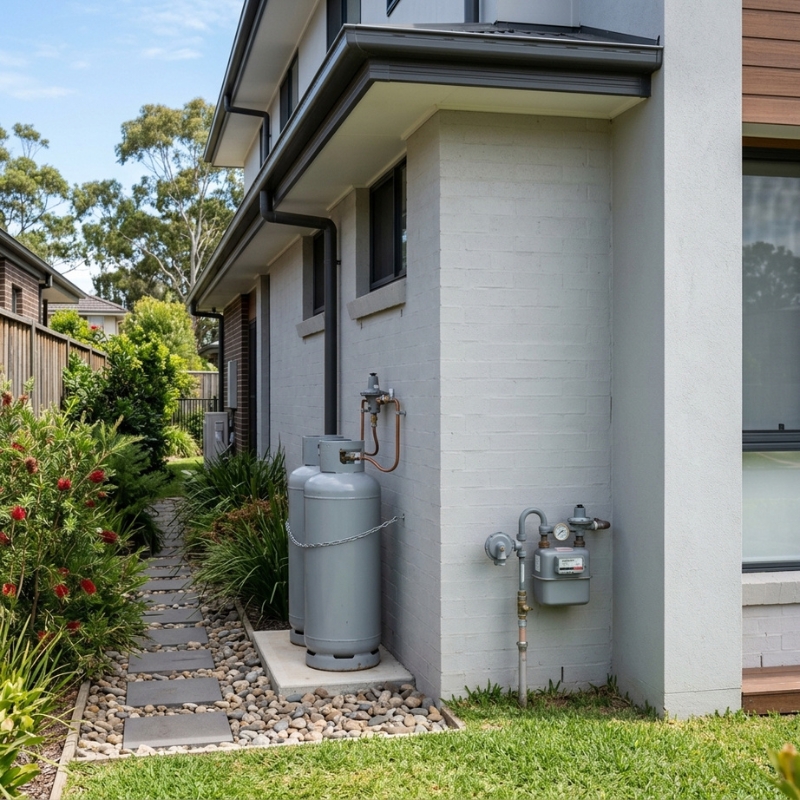
If you are setting up gas at home or weighing up a switch, you will quickly run into the same question: LPG or natural gas? Both heat your home and run your appliances, but they are delivered differently, cost differently, and are not interchangeable without the right setup. At Apex Gas Heater Service, we install and service both natural gas and LPG systems for homes across Sydney, so this guide lays out the practical differences, how the running costs compare, and how to choose the option that suits your home.
| Quick answer
Natural gas is piped to your home and is usually cheaper to run and more convenient where it is available. LPG is delivered in bottles or tanks and suits homes without a mains connection. The two burn differently, so appliances must be set up for the correct gas. A licensed gas fitter can advise, install or convert your system safely. |
What’s the difference between LPG and natural gas?
The core difference comes down to what the gas is and how it reaches you. Natural gas is mainly methane, delivered through the mains gas network straight to a meter at your home, so you have a continuous supply as long as your street is connected. LPG, or liquefied petroleum gas, is usually propane, stored as a liquid in bottles or a tank and delivered to your property, so you manage supply through refills or bottle swaps. They also burn at different pressures and energy contents, which is the key practical point: an appliance set up for natural gas will not run correctly on LPG, and the reverse is true too, without being converted. That is why the gas type is not just a billing detail but something your heater, cooktop and hot water system are physically configured for. In short, natural gas is a piped utility, while LPG is a delivered fuel, and that single difference shapes the cost, convenience and setup decisions that follow.
Running costs compared
Cost is usually the deciding factor, and while exact prices change and depend on your provider and usage, the general picture is fairly consistent. Natural gas is typically cheaper to run per unit of energy where it is available, and you pay for what you use through a metered bill, often with a supply charge. LPG generally costs more per unit and is bought in bottles or bulk deliveries, so your outlay comes in larger, less frequent chunks rather than a steady monthly bill. That said, the full comparison is not just the gas rate. With natural gas you may have connection costs if the mains is not already at your home, while with LPG you avoid connection to the network but take on delivery and bottle rental or tank costs. For a household that already has mains gas at the street, natural gas is usually the more economical long-term choice, while for a home without a connection, LPG can be the more practical option even if the per-unit cost is higher. The honest answer is that it depends on your location and how much gas you use, so it is worth comparing both for your specific situation rather than assuming one is always cheaper.
Availability in Sydney
Availability often makes the decision for you. Much of Sydney is connected to the natural gas mains, so if your street has gas and your home has or can have a meter, natural gas is usually the straightforward choice. Some areas, newer estates, or properties set back from the network do not have a mains connection, and for those homes LPG is the ready alternative because it is delivered rather than piped. If you are not sure whether your home can connect, or you are building or renovating, it is worth checking before you commit to appliances. A licensed gas fitter can tell you what is possible at your address and handle natural gas installation in Sydney if a mains connection is available.
Can you convert between LPG and natural gas?
Yes, many appliances can be converted between LPG and natural gas, but it is not a DIY swap. Because the two gases burn at different pressures, an appliance needs the correct conversion, including changing jets or injectors and adjusting the gas settings, so it burns safely and efficiently on the new gas. This work must be done by a licensed gas fitter, both for safety and to keep the appliance running correctly. Not every appliance is convertible, so it is worth checking before you assume an existing heater or cooktop can move across. If you are switching to or from bottled gas, or need reliable refills and setup, Apex can help with LPG gas service and supply and advise whether conversion or replacement makes more sense for each appliance. Never attempt to change gas types or adjust an appliance yourself, as an incorrectly set appliance can be dangerous.
Safety differences and what matters at home
Both natural gas and LPG are safe when installed and maintained correctly, and both demand the same respect. One practical difference is that LPG is heavier than air, so a leak can pool in low spots, while natural gas is lighter and tends to rise and disperse, which matters for where detectors and ventilation are best placed. Either way, the safety essentials are the same: professional installation, correctly set appliances, good ventilation, and knowing the signs of a leak, such as a gas smell, hissing, or feeling unwell. Whichever gas your home uses, annual servicing and a licensed gas fitter for any gas work are what keep it safe.
Frequently asked questions
Is LPG cheaper than natural gas in Australia?
Generally, no. Natural gas is usually cheaper to run per unit of energy where it is available, while LPG tends to cost more per unit and is bought in bottles or bulk. However, if your home has no mains connection, LPG can still be the more practical choice despite the higher rate.
Can I convert my LPG appliances to natural gas?
Often yes, but only a licensed gas fitter can do it. Conversion involves changing jets and adjusting the gas settings so the appliance burns safely on the new gas. Not every appliance is convertible, so have a professional confirm whether conversion or replacement is the better option for each one.
Which is safer, LPG or natural gas?
Both are safe when installed and maintained by a licensed gas fitter. They behave differently in a leak, as LPG is heavier than air and can pool low, while natural gas rises and disperses. Correct installation, ventilation and knowing the signs of a leak matter more than the gas type itself.
How do I know which gas my home uses?
Check your appliances and supply. A gas meter connected to the street usually means natural gas, while bottles or a tank on the property mean LPG. Appliances are also labelled for the gas they are set up to use. If you are unsure, a licensed gas fitter can confirm it quickly.
Final thoughts
LPG and natural gas both do the job well, so the right choice comes down to what is available at your home, how the running costs stack up for you, and how your appliances are set up. Natural gas usually wins on cost and convenience where the mains is connected, while LPG keeps homes off the network warm and running. For advice, installation or conversion, talk to Apex Gas Heater Service about natural gas installation or LPG gas service and supply for your Sydney home.
| Ready to book?
Choosing or switching your gas supply? Apex Gas Heater Service handles natural gas installation and LPG service and supply across Sydney. Get in touch for advice and a quote. |