
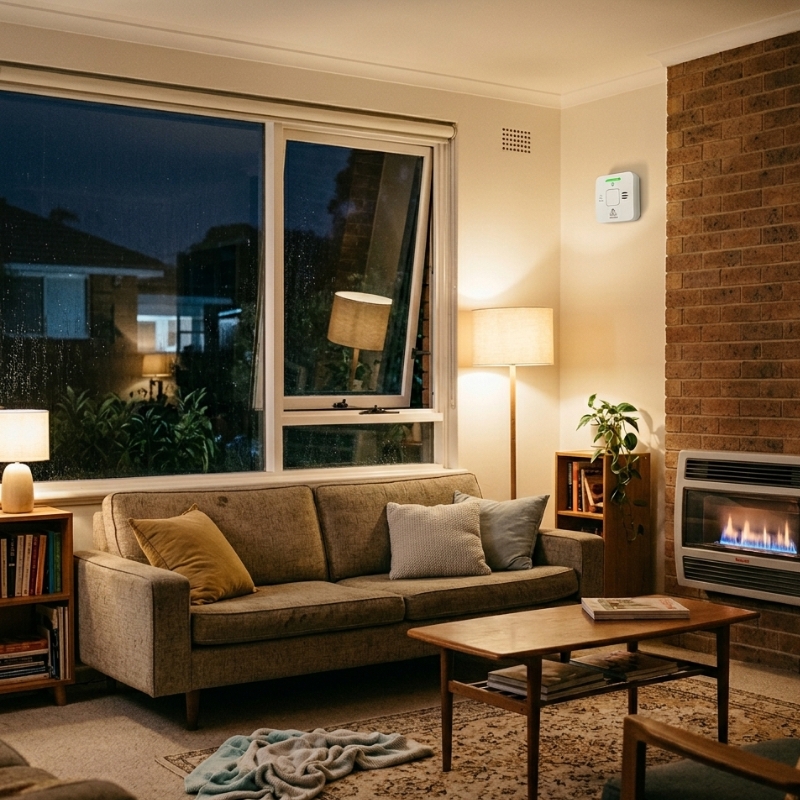
Sydney winters aren’t extreme, but they’re cold enough that we shut the house up, flick the heater on, and stop thinking about airflow. That’s the perfect setup for one of the most dangerous “invisible” risks in the home: carbon monoxide.
Carbon monoxide (often shortened to CO) is especially worrying because it can build up indoors without obvious warning. It doesn’t announce itself like smoke, and people often mistake early symptoms for a cold, the flu, or just “one of those days”.
This guide is written for Sydney households using gas heating in winter. It’s practical, family-focused, and designed to help you recognise the warning signs early, respond safely, and reduce the risk in the first place.
What carbon monoxide is (and why it matters)
Carbon monoxide is a poisonous gas produced when fuels burn incompletely. That can include natural gas, LPG, wood, petrol, and charcoal. Gas heaters are designed to burn fuel efficiently and vent by-products safely, but if something goes wrong, carbon monoxide can be produced and accumulate indoors.
The risk is less about “gas heaters are dangerous” and more about this reality:
• Any fuel-burning appliance can become unsafe if it’s faulty, poorly vented, blocked, or used incorrectly
• Sydney homes in winter often have windows shut and airflow reduced
• Symptoms can look like common illnesses, so people stay inside and keep running the heater, which can make exposure worse
For official health guidance, NSW Health explains carbon monoxide risks and safety actions here: NSW Health carbon monoxide information.
How carbon monoxide can be linked to gas heaters
Carbon monoxide issues usually come down to one (or a combination) of these:
• Incomplete combustion inside the heater (not burning “cleanly”)
• Venting problems (flues, chimneys, or vents blocked or damaged)
• Negative pressure or backdrafting (airflow pulls fumes back into the room)
• Using an appliance in a way it wasn’t designed for (running in a sealed room, modifying ventilation, using outdoor equipment indoors)
Some heaters are designed to be flued (exhaust goes outside). Others are flueless and rely heavily on correct room ventilation and safe operating conditions. Either way, the safest approach is to assume airflow and maintenance matter, especially when the house is closed up.
Q&A: Can carbon monoxide build up even if I don’t smell anything?
Yes. Carbon monoxide itself has no smell, taste, or colour. If you notice an odour, it might be from something else (dust burning off, a different combustion by-product, or a gas leak). Don’t rely on your nose to detect CO.
The warning signs Sydney families should take seriously
Carbon monoxide poisoning can affect people differently depending on exposure level, time exposed, age, and existing health conditions. What makes it tricky is that early signs often mimic everyday illnesses.
Common early symptoms in adults
• Headache (often dull, persistent, and “unusual”)
• Dizziness or light-headedness
• Nausea or vomiting
• Fatigue, weakness, or feeling unusually “washed out”
• Shortness of breath
• Confusion or trouble concentrating
Symptoms that suggest more serious exposure
• Chest pain
• Severe confusion, fainting, or collapse
• Seizures
• Loss of consciousness
Warning signs in children and babies
Kids can be affected faster because their bodies are smaller and they breathe more rapidly.
Look for:
• Sleepiness or unusual lethargy
• Vomiting
• Irritability or “not themselves” behaviour
• Poor feeding (babies)
• Rapid breathing
• Pale skin
Pets can show signs first
Pets are often a first clue because they’re closer to the ground at times and may be indoors for long stretches.
Watch for:
• Unusual tiredness
• Vomiting
• Staggering or weakness
• Collapse
The biggest “pattern clue”: symptoms improve when you leave the house
One of the most useful real-world signs is a pattern, not a symptom.
If multiple people in the home feel unwell at the same time (especially headache, nausea, dizziness), and everyone feels noticeably better after being outside or away from home, treat that as a serious carbon monoxide red flag.
This is especially important in Sydney during:
• The first few cold nights (when heaters run longer than usual)
• Wet weekends (everyone stays inside)
• Overnight use (symptoms noticed on waking)
Q&A: How do I tell the difference between CO exposure and the flu?
You can’t reliably tell by symptoms alone. The key difference is the household pattern:
• Several people (and sometimes pets) are affected at the same time
• Symptoms are worse at home and better outside
• Symptoms appear when the heater is running, especially in a closed room
When in doubt, treat it as a safety issue first.
What to do immediately if you suspect carbon monoxide
If you suspect carbon monoxide exposure, don’t try to “wait it out”.
Do this:
• Move everyone outside or into fresh air immediately (including pets)
• Turn off the heater and any other fuel-burning appliances if it’s safe to do so
• Open doors and windows on your way out (ventilate)
• Seek urgent medical advice if anyone has significant symptoms (especially children, pregnant people, elderly family members, or anyone who fainted or had chest pain)
After the immediate risk is handled, the next step is to identify and address the source safely. If you’re unsure whether the heater is operating safely, start with gas heater safety checks so the appliance and ventilation can be assessed properly.
Household risk factors that are common in Sydney
Sydney has a mix of home styles and heating setups. These factors can raise risk:
• Older houses and units with aging flues, vents, or chimneys
• Renovations that improve insulation and sealing (great for comfort, but can reduce airflow)
• Bedrooms with doors closed at night and minimal ventilation
• Long runtime during cold snaps (especially overnight)
• Blocked vents due to furniture placement or DIY modifications
• Poor maintenance or delayed servicing
None of these means your home is unsafe. They mean you should be a bit more deliberate about ventilation, safe operation, and early warning signs.
The “don’t do this” list that prevents many incidents
A lot of dangerous CO exposure scenarios are caused by misuse rather than a sudden, unpredictable fault.
Avoid these:
• Never use outdoor heaters, BBQs, or camping stoves inside the home or garage
• Never run a fuel-burning appliance in an enclosed, unventilated space
• Don’t block vents or air inlets because a room “feels draughty”
• Don’t ignore persistent condensation, soot marks, or unusual flame behaviour
• Don’t assume an alarm replaces a safe appliance condition (it’s a backup, not the solution)
Q&A: Is opening a window “enough” to stop carbon monoxide?
Fresh air helps dilute indoor air, but it doesn’t fix the underlying problem. If a heater is producing carbon monoxide, the safest response is to stop using it and have the cause identified.
Practical signs your heater may not be operating safely
Not all of these point to carbon monoxide specifically, but they are worth taking seriously because they can indicate combustion or ventilation problems.
Look for:
• Soot marks or dark staining around vents, flues, or the heater
• Pilot light or flame looking unusual (for example, not steady)
• Excessive condensation on windows when the heater is running
• Unusual smells that persist (even if you can’t identify them)
• People feel unwell, mostly when the heater is on
• A room feeling “stuffy” or causing headaches quickly
If you’re seeing warning signs, it’s reasonable to seek help with a faulty gas heater rather than continuing to operate it “just for tonight”.
Carbon monoxide alarms: where they help (and where people get it wrong)
CO alarms can be a useful additional layer of safety, especially in bedrooms and living areas where people spend long periods.
A few practical principles:
• Put alarms where they can wake you (near sleeping areas) and where you spend time (living spaces)
• Follow the manufacturer’s placement instructions carefully
• Test the alarm regularly and replace it according to the recommended lifespan
• If an alarm activates, treat it seriously and respond immediately
Important: an alarm doesn’t make a faulty heater safe. It’s there to alert you early so you can get to fresh air and stop exposure.
Q&A: Should I install a CO alarm if I have a gas heater?
It can be a sensible precaution, particularly for households with children or anyone at higher risk. Just remember: alarms are a supplement to safe operation and maintenance, not a substitute.
How a gas heater works (so the safety logic makes sense)
You don’t need to be a technician to understand the basic idea. What matters is knowing where things can go wrong.
At a high level:
• Gas enters the heater through controlled valves
• It mixes with oxygen and burns in a combustion chamber
• Heat transfers into the room (directly or via a heat exchanger/ducts)
• By-products of combustion should be managed safely (often vented outside if flued)
When the burn is efficient and the venting/airflow is correct, the system can operate safely. When combustion is incomplete or exhaust can’t leave properly, the risk of carbon monoxide rises.
If you want a straightforward overview to ground the basics, see: How does a gas heater work in a home.
A simple “Sydney winter” safety routine for families
You don’t need to overcomplicate this. Consistency beats complexity.
Before winter (or before the first cold run):
• Make sure vents and air inlets aren’t blocked by furniture or curtains
• Check the area around the heater for dust build-up and keep it clear
• If you have a flue/chimney, look for visible damage or signs of blockage
• If you use alarms, test them
During winter use:
• Aim for some airflow, especially during long run times
• Pay attention to how people feel, especially at night and in the morning
• If something seems “off”, don’t push through it
If anything worries you:
• Stop using the heater and prioritise safety over comfort
• Treat symptoms as potentially serious if they cluster in the household
Q&A: What’s the safest approach if I’m not sure?
Assume it could be serious, get everyone into fresh air, and stop using the appliance until you’re confident it’s safe. It’s better to be overly cautious with carbon monoxide.
Myths that can put families at risk
Myth 1: “I’d smell carbon monoxide”
You won’t. Carbon monoxide has no smell. If you smell something, it could be another issue, but don’t rule out CO because “it doesn’t smell like anything”.
Myth 2: “Only old heaters cause problems”
Any appliance can develop faults, and venting issues can occur even if the heater is relatively new.
Myth 3: “If it’s only mild symptoms, it’s not dangerous”
Mild symptoms can be the early stage of exposure. If you stay indoors and keep the heater running, exposure can increase.
Myth 4: “Cracking a window means I’m safe”
Ventilation helps, but it doesn’t fix a faulty appliance or venting problem.
Final FAQ
Can carbon monoxide poisoning happen while I’m asleep?
Yes. That’s one reason it’s so dangerous. If you wake up with headaches, nausea, dizziness, or unusual fatigue (especially if others in the home feel the same), treat it seriously.
Can a gas heater produce carbon monoxide even if it seems to be heating normally?
Yes. You may not notice performance issues. Safety problems can exist even when the room feels warm.
What’s the fastest way to reduce risk during winter?
• Keep airflow in mind (don’t seal everything completely for long runs)
• Watch for household symptom patterns
• Use alarms as an extra layer if appropriate
• Don’t continue using a heater if something feels wrong
Are children more vulnerable to carbon monoxide?
Children can be affected more quickly due to body size and breathing rate. Take any unusual symptoms seriously, especially if they appear while a heater is running.
If I suspect carbon monoxide once, is it safe to use the heater again later?
Not until the source has been identified and addressed. Carbon monoxide risk isn’t something to “trial and error” your way through.